
What You’ll Learn
Traditional budgets micromanage every dollar, then collapse the first weekend you forget to log coffee. The anti-budget flips that script: automate the important stuff first, then guilt-free spend the rest. In this guide, you’ll learn why classic budgets fail, how to set up a pay-yourself-first system in under an hour, and how to handle real-life chaos—variable income, debt, big goals, and surprise expenses—without living in a spreadsheet.
Key takeaways
- Save first, spend the remainder. Automate your goals on payday; your checking account becomes your “allowance.”
- One decision beats 100 mini decisions. You choose targets once, not every time you tap your card.
- Friction where it helps, ease where it matters. Make saving automatic; make spending visible, not painful.
- Good enough > perfect. Review monthly, adjust quarterly, keep moving.
Why Traditional Budgets Fail (And What to Do Instead)
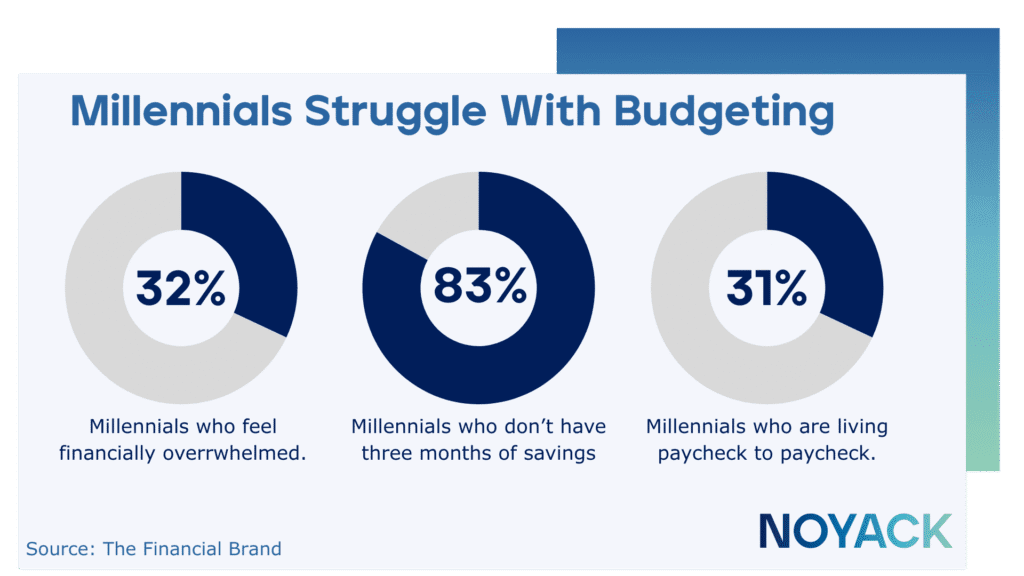
Classic budgets demand constant tracking, willpower, and time. Most people don’t have three. The anti-budget solves this by removing daily decisions. You set a few big targets, automate them, and let the system work in the background. Instead of chasing categories, you guard the top of the funnel: what leaves your paycheck and where it lands.
The mindset shift
- From perfect tracking → to reliable automation
- From guilt over lattes → to confidence in funded goals
- From after-the-fact cuts → to before-payday decisions
The Anti-Budget
Pay yourself first—automatically—then spend the rest without shame.
That’s it.
Your “budget” is simply a short list of automatic transfers that fire on payday. If the goals are funded, you’re on track.
The 5 Buckets (Set It and Forget It)
Use these as defaults. Tweak the percentages to your life, not the other way around.
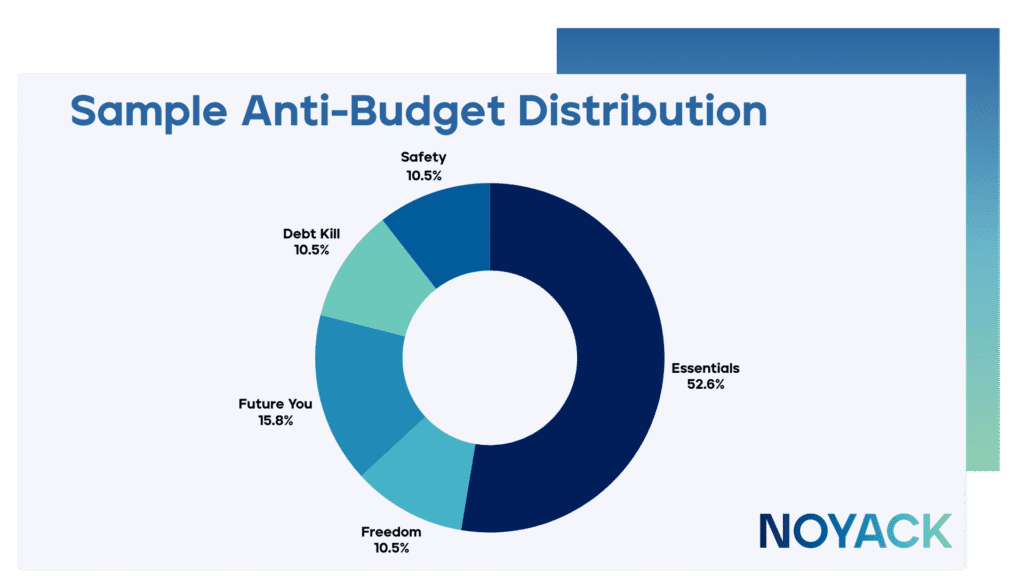
- Essentials (Checking): Rent/mortgage, utilities, groceries, insurance, transport. This is where your debit/credit spending happens.
- Freedom (Fun): Dining out, travel, hobbies. Treat it like a pressure valve—fund it on purpose.
- Future You (Invest): 401(k)/IRA/HSA/Taxable investing. Automate at the employer and brokerage level.
- Safety (Cash Cushion): Emergency fund and short-term sinking funds (car service, gifts, annual renewals).
- Debt Kill (If applicable): Extra principal on high-APR debt until it’s gone.
Starter targets (HENRY-friendly)
- Essentials: 50–60%
- Freedom: 10–20%
- Future You: 15–25% (blend of retirement + taxable)
- Safety: 5–10% until you reach 3–6 months of expenses
- Debt Kill: All excess if APR > 8–9% (temporarily shrink Freedom)
45-Minute Setup (No Spreadsheet Required)
Step 1 — Name the goals (10 min)
List the must-fund items: retirement %, emergency fund target, big upcoming purchases (move, wedding, travel), and any high-APR debt.
Step 2 — Map payday automation (20 min)
- At your employer: set/raise 401(k)/HSA contributions.
- At your bank: create auto-transfers on payday +1:
- To Safety savings (emergency + sinking funds)
- To Freedom checking (or separate debit)
- To Debt Kill (extra payment)
- To Safety savings (emergency + sinking funds)
- At your brokerage: schedule recurring buys (Roth/IRA/taxable).
Step 3 — Right-size checking (10 min)
What’s left after automation is your real, guilt-free spend. If you chronically overspend, add gentle friction: turn off credit card auto-pay for full (still on-time, of course) until your Freedom rhythm stabilizes; or route Freedom to a separate card you pay weekly.
Step 4 — One page, visible (5 min)
Write your five buckets and amounts on a phone note. If it’s not visible, it’s optional. Not optional.
How to Handle Real Life (Without Breaking the System)
Variable income (freelancers, commissions)
- Set a base paycheck equal to your worst-case monthly income. Automate buckets off that base.
- Hold extra inflows in an Income Smoothing account; on the 1st, “pay yourself” the base.
- Quarterly, sweep any surplus: 50% Future You, 30% Safety, 20% Freedom.
High-APR debt
- If APR > 8–9%, move most of Freedom to Debt Kill until gone.
- Keep a modest Freedom line to avoid binge-spend backlash.
- Celebrate each $1,000 knocked out—then re-aim that payment at Future You.
Big goals (down payment, sabbatical, wedding)
- Create a named Sinking Fund per goal with a fixed payday transfer.
- Price the goal backward: (Total ÷ Months) = Transfer.
- Keep it in high-yield savings; don’t risk timeline money in stocks.
Couples
- One shared essentials account, two personal Freedom accounts.
- Agree on automation; stop arguing over receipts.
What to Do Each Week and Month
You do not need to track every latte. You do need to confirm the automation hit.
Weekly (3 minutes)
- Glance at checking: bills cleared? Freedom balance healthy?
- Skim card transactions; flag fraud, not feelings.
Monthly (15 minutes)
- Confirm transfers ran.
- If checking ends with a consistent surplus/shortfall, nudge bucket sizes by 1–2%.
- Review one money “lever” (insurance quote, phone bill, subscriptions).
Quarterly (30 minutes)
- Re-aim raises/bonuses: 50% to Future You, 25% to Safety/Sinking, 25% to Freedom.
- Increase retirement deferral by 1% if you’re below your target.
Suggested Targets by Season of Life
These are ranges, not rules. Pick the closest lane and adjust.
- Starter (building cushion, some debt):
Essentials 60%, Freedom 10–15%, Future You 10–15%, Safety 10–15%, Debt Kill as needed. - HENRY sprint (income rising, goals stacking):
Essentials 50–55%, Freedom 10–15%, Future You 20–30%, Safety 5–10%, Debt Kill (if high APR). - Family phase (childcare + housing heavy):
Essentials 60–65%, Freedom 10–15%, Future You 15–20%, Safety 10%, Sinking Funds for predictable spikes. - Deleveraging (post-debt, ramp investing):
Essentials 50–55%, Freedom 15–20%, Future You 25–30%, Safety top-ups only.
Make It “Stick” with Light Friction
The anti-budget works because it’s easy. Add only the friction that improves outcomes.
- Separate Freedom card with a weekly auto-pay from Freedom account.
- Bill due-date clustering (e.g., 5th and 20th) to see cash rhythm.
- Bank alerts: low balance, large transaction, transfer success.
- Unsubscribe sprints once a quarter; capture quick wins.
Anti-Budget for Advanced Users
When the base system hums, consider these upgrades:
- Rule of 3 Investing: 3 automatic buys (retirement, HSA, taxable index fund).
- Annual Big-Ticket Calendar: Pre-load sinking funds for travel, insurance, holidays, property taxes.
- Raise Rule: Every raise gets pre-split before it hits checking.
- Windfall Split: 70% long-term (invest/debt), 20% medium (sinking funds), 10% fun (on purpose).
30-Day Anti-Budget Challenge
- Day 1: List five buckets + set initial percentages.
- Day 2: Turn on payroll and bank transfers.
- Day 7: Open/label accounts (Safety, Freedom, Sinking).
- Day 14: Verify the first automation cycle worked; adjust by 1–2%.
- Day 21: Cancel/renegotiate one bill; redirect savings to Future You.
- Day 30: Snapshot balances; raise retirement deferral by 1%.
Bottom Line
If budgets haven’t stuck, the problem isn’t you—it’s the tool. The anti-budget funds your future first, then lets you live on the remainder without a spreadsheet. Start with five buckets, automate on payday, and review lightly. When the important things happen by default, you can stop negotiating with yourself and start making real progress.